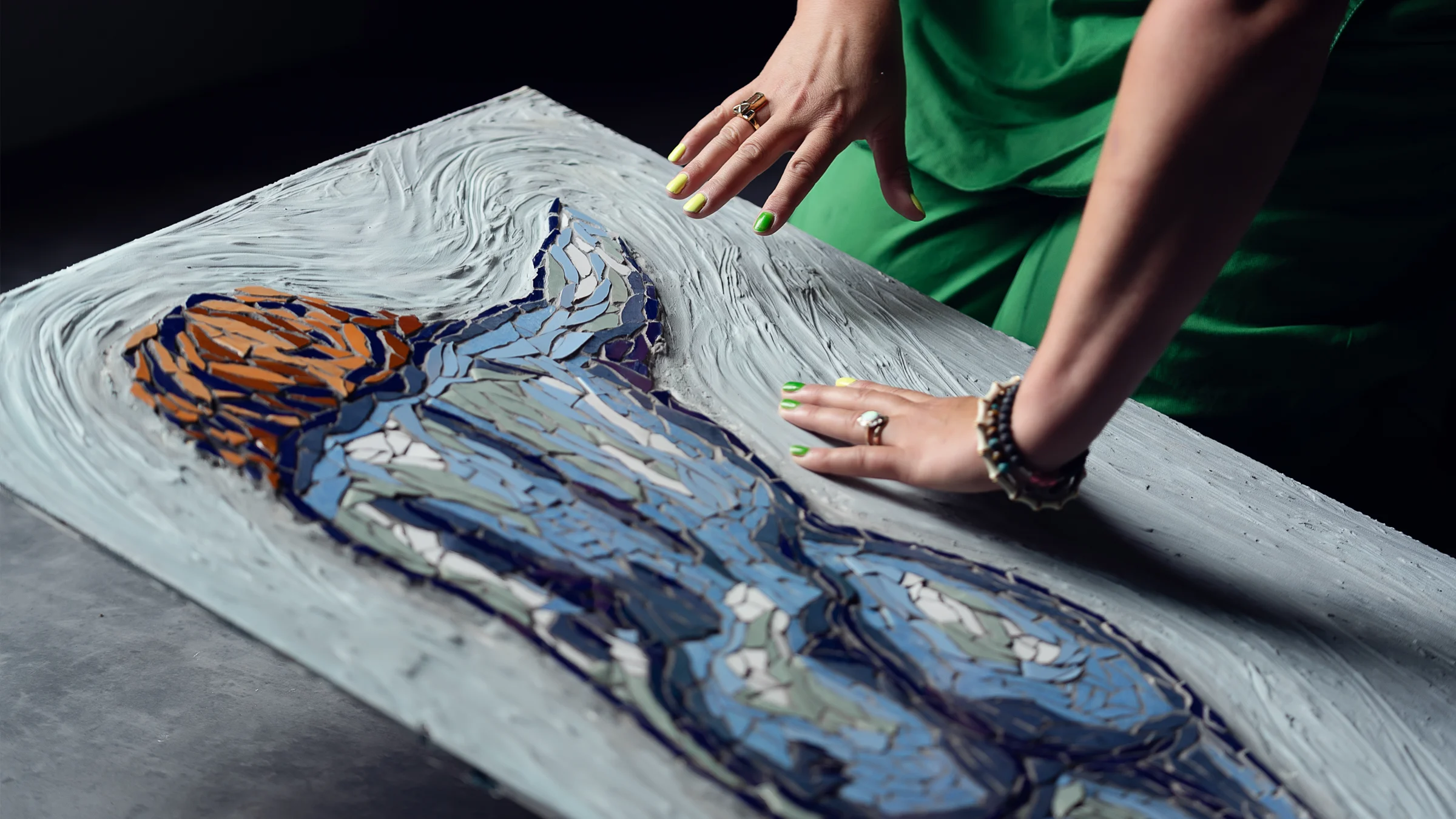
A Physical and Psychological Response to Scars. An exploration rooted in themes of imperfection, recovery, and the therapeutic power of creative expression.
Using broken materials, I examine trauma, healing, body positivity, and mental health. My work transforms personal experience into visual narrative — each fractured piece a reflection of emotional and physical repair.
After experiencing burnout, the loss of my mother, and a glass-related accident that left me with lasting scars, I turned to mosaic as a way to process the pain.
Over time, this practice has evolved beyond making. It has become my language — a way to communicate what words cannot express.
Wings in the Cracks
“A mosaic of breaking and becoming.”
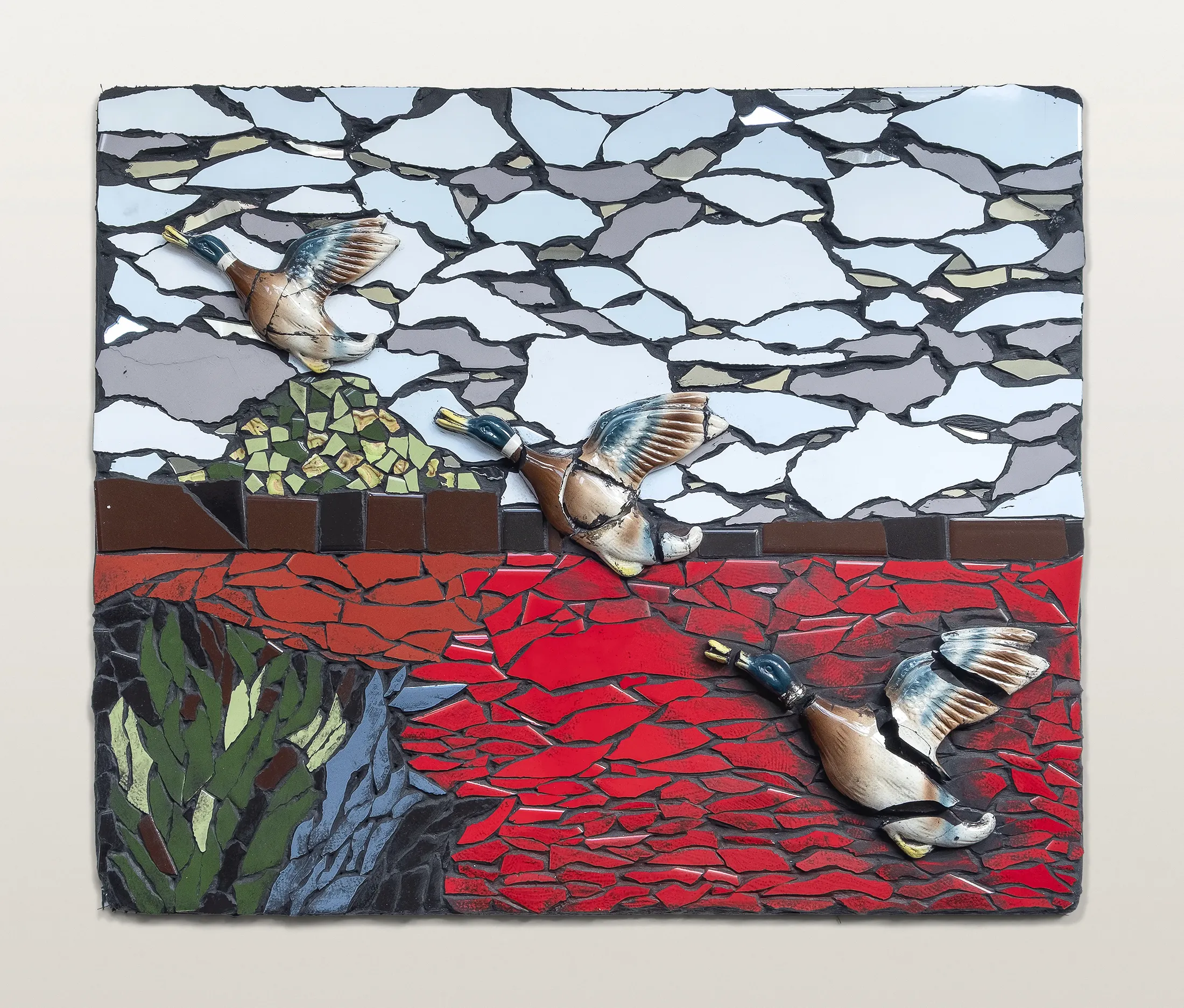
For years, I lived a "double life." To the outside world, I was a successful designer with a "perfect" life, yet I was trapped in a velvet coffin of alcoholism and self-loathing. The three flying ducks in this work represent that kitsch, "home sweet home" facade—the rigid mask I wore to hide the growing cracks in my foundation.
Everything changed with a near-fatal accident. Severely injured by glass and losing four pints of blood, I narrowly escaped death. In this mosaic, the turbulent red lake is that lifeblood; the jagged blackness is the depression and the "sink" of self-hatred that followed a long, painful recovery.
To create this landscape, I used entirely reclaimed ceramic and mirror materials, deliberately breaking every piece myself. I fought to create shard shapes that are jagged and menacing, mirroring the very glass that wounded me. By physically mastering these sharp edges, I have turned the medium that nearly took my life into a tool for my salvation.
Now nearly two years sober, I see my large physical scars no longer as marks of shame, but as the grout holding my new life together. Here, the ducks map the start of my journey: sinking in the blood of the bottom, yet finally catching the light of the silver-lined clouds above—mirrored shards that invite you to see your own reflection in the light of recovery.
Lost and Found
“An archaeology of the self.”
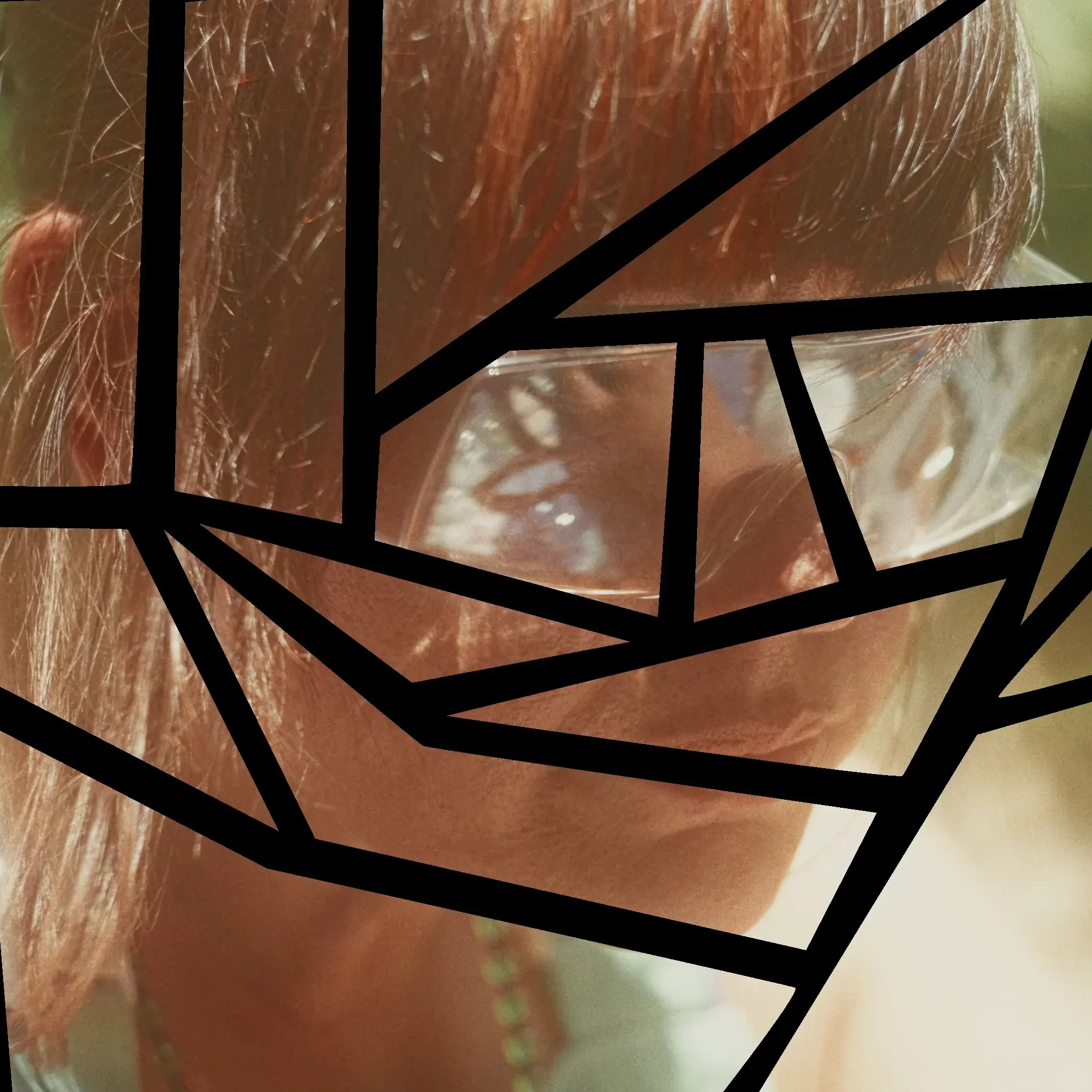
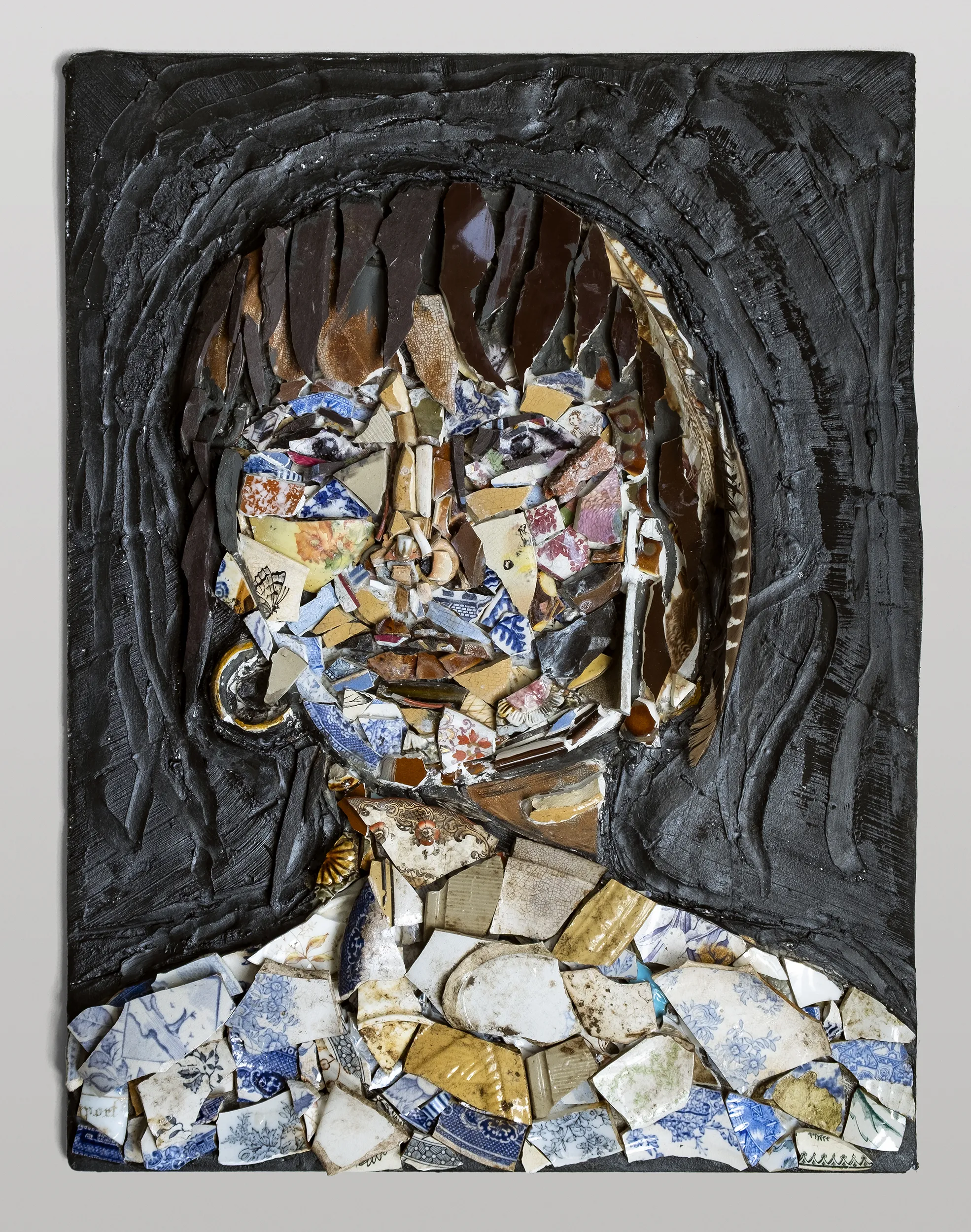
If the first work was about the "breaking," this self-portrait is about the "unearthing." It is a physical archive of a personal awakening, crafted from Victorian pottery fragments I excavated from the South Common in Lincoln—the very land that served as my childhood playground.
For decades, I walked this earth without seeing the treasures beneath my feet. It was only after being "broken open" myself by the losses of the previous years—my mother’s passing and my own brush with death—that I gained a new love for fractured things. I realised these shards weren't debris; they were waiting to be washed clean of the dirt and given a new narrative.
This is my first-ever mosaic self-portrait. It marks the moment I stopped hiding behind a "perfect" facade and began the work of piecing myself back together. By using these weathered fragments, I am proving that beauty is not found in perfection, but in the resilience required to make something whole again. What was once lost in the nettles and the earth has finally been found.
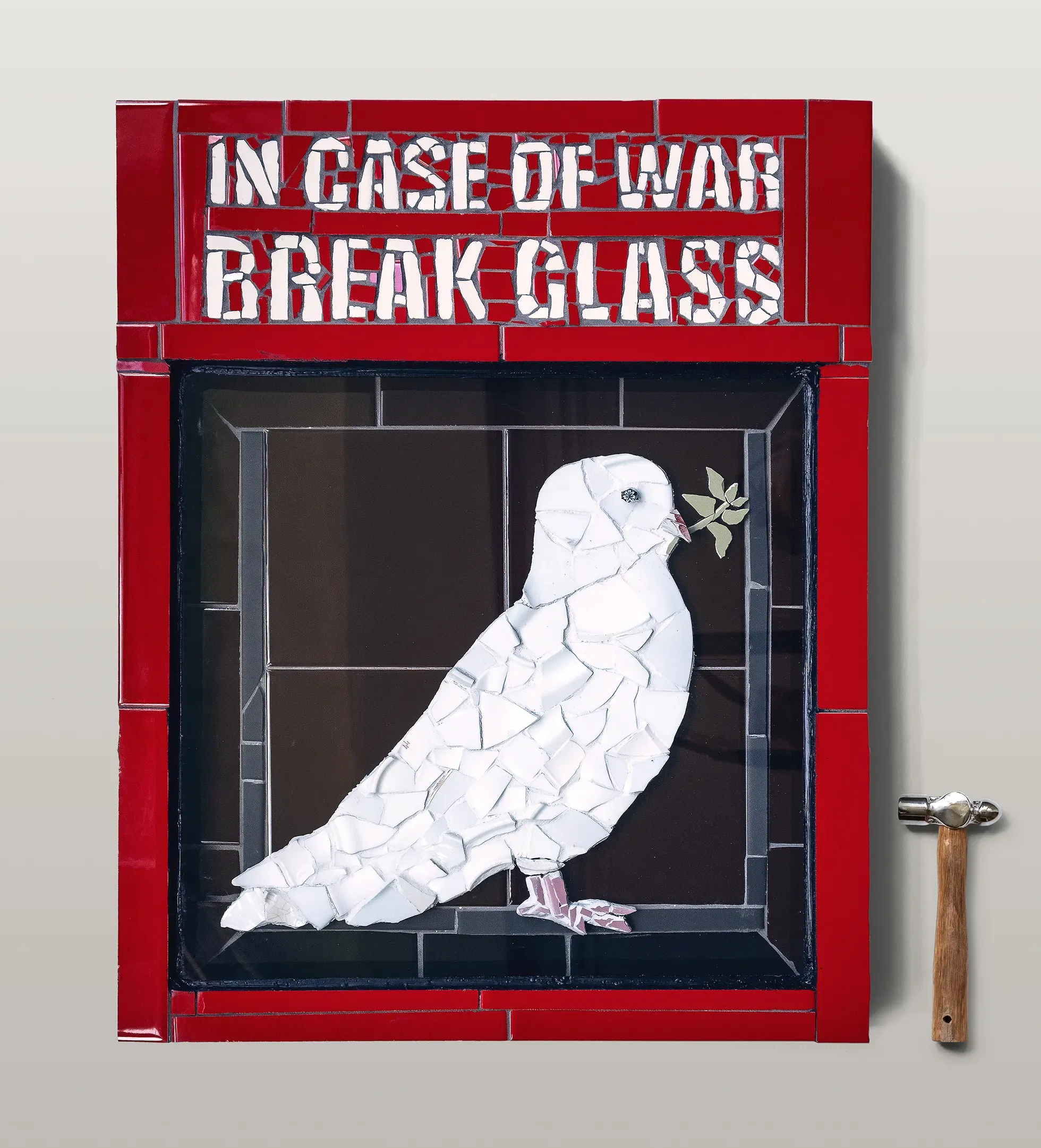
In Case of War – Break Glass
“A physical and psychological response to scars.”
If my journey began with an accidental breaking, this final piece represents an intentional one. After years of hiding behind a "perfect" facade, my diagnosis of Borderline Personality Disorder (BPD) finally gave a name to the internal war I had been losing. It was the catalyst for this ultimate act of reclamation.
The emergency red box symbolises the rigid structures and generational expectations that once defined me. For 46 years, I lived by rules of "perfection" that weren't my own—even believing a simple tattoo was "not lady-like." The Picasso dove, meticulously reconstructed from hand-broken shards of reclaimed china, sits behind a glass pane awaiting release. It represents the moment I finally cut the "apron strings" of the past and chose to set my own voice free.
In this work, the reflections in the glass are a confrontation. They remind us that we are the ones holding the hammer; we are responsible for the "emergency act" of our own liberation. By mastering the very medium that nearly took my life, I have transformed a near-fatal trauma into a tool for peace. My accident didn’t just break my body—it broke the cycle of addiction. As a full-time artist and Ambassador for Sobriety, I now know that peace shouldn't be an emergency measure; it should be the standard. This work is my quiet protest and a lasting truce, proving that even from the most menacing shards, we can craft a life of profound purpose.
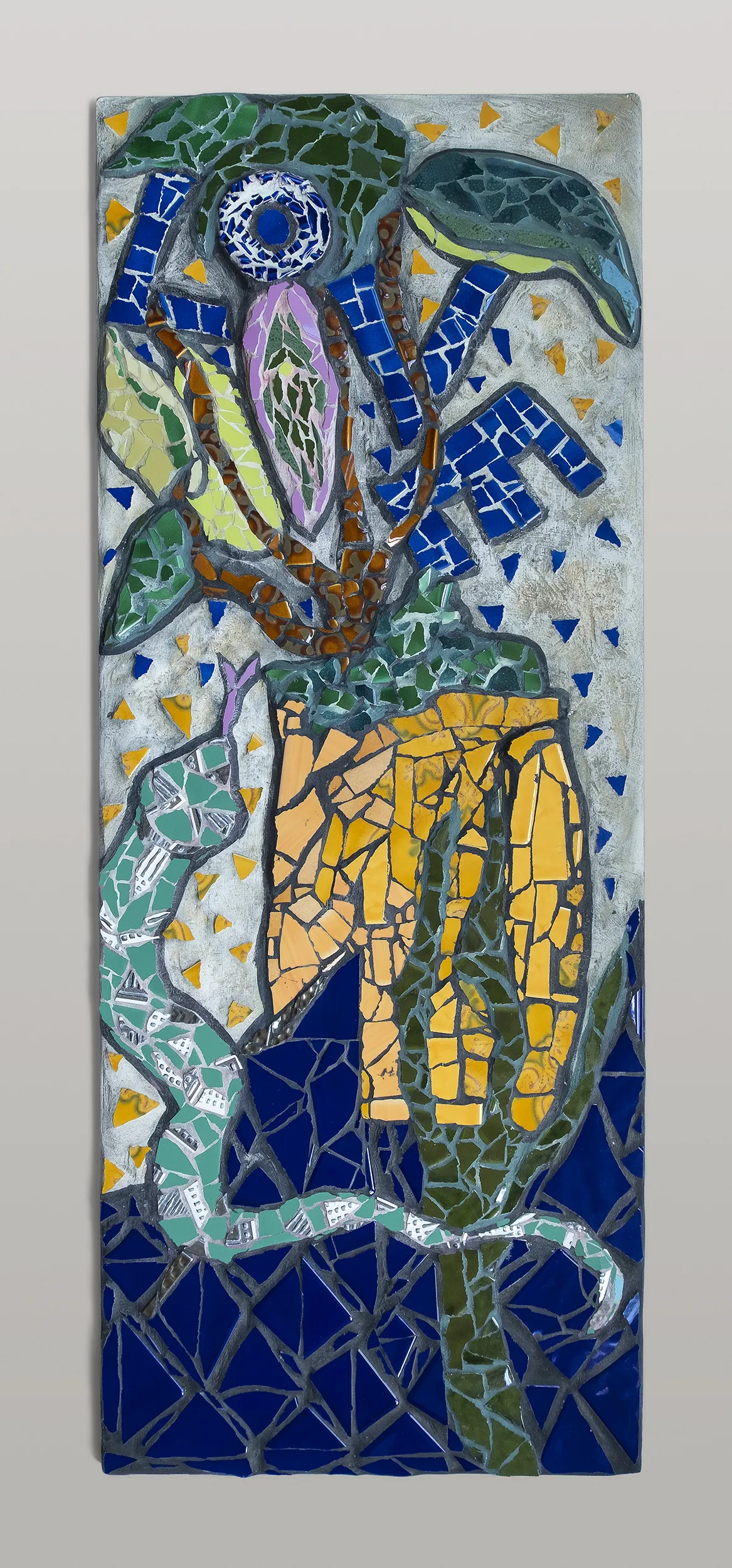
The Sovereignty of the Garden
“A visual manifesto of the self-authored life.”
While my earlier works focused on the battle to break free, this mosaic celebrates the vibrant reality of living in that freedom. Reimagining the story of Adam and Eve through the electric colours of Marrakech’s Jardin Majorelle, this piece is a reclamation of my femininity and a move beyond the "male gaze" I once felt forced to satisfy.
At the heart of the work sits a vibrant yellow vessel. Its curves mirror a woman’s hips, serving as a sacred container for a "Tree of Life" rooted in the female spirit. Though I am childless by choice, this work honours the belief that carrying an artistic legacy is as sacred as a bloodline. Biology is only one way to endure; the transmission of vision to the children I teach is another. My legacy isn't carried in DNA, but in the inspiration I pass on.
The serpent remains on the edge—a symbol of the external distractions I have finally learned to sideline—while the true power remains internal. By piecing together these discarded shards, I have transformed from an object to be observed into the architect of my own life. This work celebrates a new kind of "knowing": the realisation that self-love is the only "forbidden" fruit worth tasting, and to seed a mind is as profound as to seed a womb.